Most people who carry chronic physical tension do not think of themselves as people who carry chronic physical tension.
They think of themselves as people who get a stiff neck sometimes. Who clench their jaw when a deadline is close. Who have always had tight shoulders, as if this is a fixed personal characteristic rather than an accumulated response to years of unaddressed load. Who sleep lightly and wake up not quite rested without being able to explain why. Who find it genuinely difficult to sit still, to stop thinking, to be in a room without something demanding their attention — and who have normalised all of it to the point where the absence of tension would feel stranger than its presence.
This is not a niche experience. It is the default operating state of a significant proportion of professionals in high-demand environments, and it has a physiology — a specific, documented pattern of how unaddressed stress and postural load accumulate in the body over time, where they live, and what it takes to move them.
Understanding that pattern changes what recovery looks like. It changes which interventions actually work, and why.
The Body Does Not Forget
The relationship between psychological stress and physical tension is not metaphorical. It is mechanical.
When the nervous system registers threat — and the nervous system, operating on hardware that evolved long before performance reviews and traffic, does not reliably distinguish between a physical threat and a professional one — it initiates a cascade of muscular preparation. The shoulders elevate slightly. The jaw tightens. The muscles of the upper back and neck contract in preparation for effort that, in a modern professional context, never arrives. The hip flexors shorten as the body assumes a braced posture. The breathing becomes shallower, drawn higher into the chest rather than expanding through the diaphragm.
In a situation of genuine physical demand, these responses resolve. The effort happens, the muscles fatigue, the nervous system discharges, and the body returns to a baseline.
In a sustained professional environment, the effort does not happen. The physical preparation activates and stays activated, hour after hour, day after day, without the resolution that movement and physical exertion would provide. The muscles hold their contracted state. The nervous system maintains its elevated readiness. And over time, the pattern becomes structural — the shoulders do not drop to their natural resting position because they have not been there for long enough to remember where it is.
This is what the body keeps. Not the memory of specific stressors, but the physical posture of bracing against them, held in tissue long after the individual moments have passed.
Where It Lives
Tension does not distribute evenly through the body. It concentrates in predictable locations, and understanding those locations makes it considerably easier to address them.
The upper trapezius — the broad muscle running from the base of the skull across the top of the shoulder — is the most common site of chronic holding in desk workers and professionals. It is the muscle most directly activated by the shoulder-elevation response to stress, and it is also the muscle most consistently loaded by the forward-head posture that sustained screen use produces. A trapezius that has been chronically shortened and overloaded develops what manual therapists describe as trigger points — localised areas of sustained contraction that refer pain into the neck, the base of the skull, and behind the eye, and that do not resolve with rest alone because rest does not address the neuromuscular pattern driving them.
The suboccipital muscles — the small, deep muscles at the base of the skull — are the second major site. These are the muscles that work to maintain eye level as the head migrates forward of its natural position over the cervical spine, a position that adds significant mechanical load for every centimetre of forward displacement. Chronic suboccipital tension is the most common driver of tension headaches and the specific feeling of a heavy, pressurised head that many professionals experience by late afternoon.
The jaw and masseter are the third. The habit of clenching — often unconscious, often most pronounced during concentration or during sleep — loads the masseter and the temporalis across a surface area that most people never think to address. The referred pain patterns from chronic jaw tension reach into the temple, the ear, and the upper neck, overlapping with and compounding the tension patterns from the upper trapezius and suboccipitals in ways that make the source of any individual symptom difficult to isolate.
Lower in the body, the hip flexors — the iliopsoas complex — shorten progressively with sustained sitting, pulling the lumbar spine into an anterior tilt that loads the lower back and disrupts the natural curve of the spine. This is the origin of the specific lower back stiffness that emerges after long periods at a desk and that feels, at first, like a seating problem rather than a muscular one.
Why Rest Does Not Resolve It
The instinctive response to physical tension is rest — to stop doing the thing that caused it and wait for the body to return to baseline.
This works for acute tension with a clear physical cause. It does not work particularly well for chronic postural and stress-related tension, for reasons that are mechanical rather than motivational.
A muscle held in chronic contraction develops a neuromuscular pattern — a default resting tone set higher than it should be by a nervous system that has calibrated its baseline upward over time. Resting does not change that calibration. Lying on a sofa instead of sitting at a desk does not release the trapezius if the trapezius’s resting tone is set to a level that keeps it partially contracted regardless of demand. Sleep does not release the jaw if the clenching pattern persists into unconsciousness, which for many people it does.
What changes the calibration is direct input — skilled manual pressure that communicates to the muscle and the nervous system, through the mechanoreceptors in the tissue, that the contraction is no longer required. This is the mechanism behind why massage works on chronic tension in ways that rest does not. It is not simply about mechanical pressure on tight tissue. It is about neurological re-education — giving the nervous system the sustained, specific input it needs to release a holding pattern it has been maintaining, in some cases, for years.
What Shiatsu Addresses
Shiatsu massage — the Hong-Kong-style deep tissue approach that forms the technical foundation of Club Dynasty’s therapeutic offering — is particularly well-suited to the pattern of tension that desk fatigue and sustained professional stress produce.
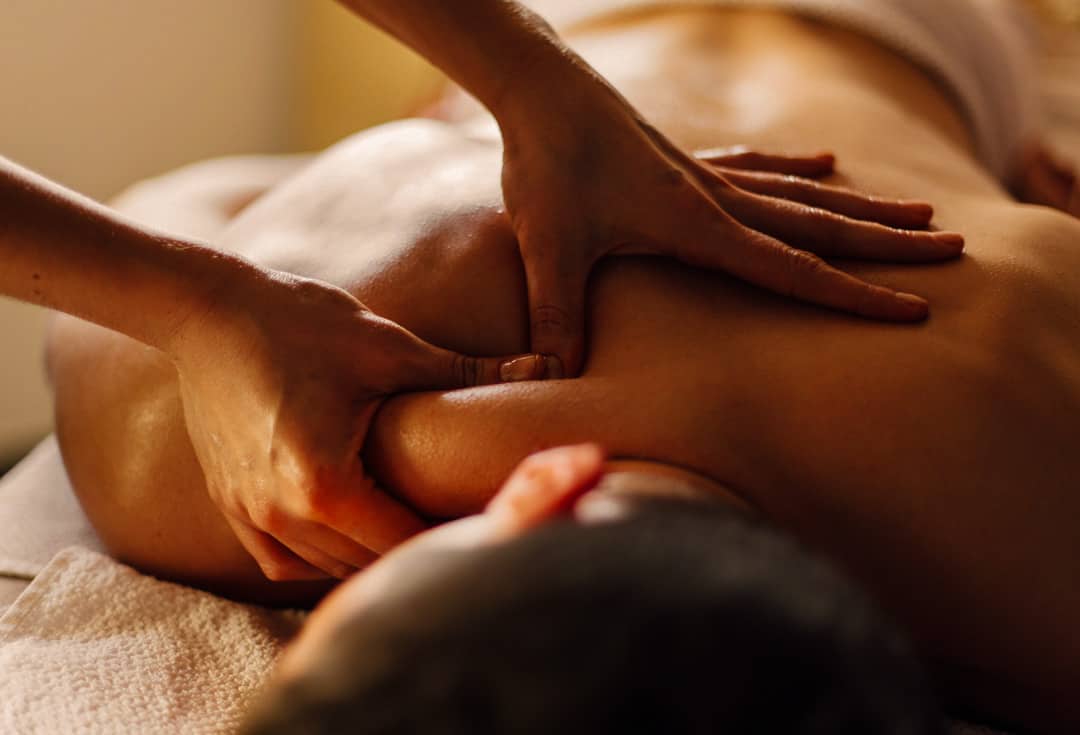
The technique works through sustained, graduated pressure applied to specific points along the body’s muscular and connective tissue architecture, rather than the gliding strokes of Swedish massage. For chronic tension held in the trapezius, the suboccipitals, the rhomboids, and the deep cervical muscles, this sustained pressure approach reaches the tissue at the depth where the holding pattern lives — deeper than surface-level work can access, applied with enough duration to allow the neuromuscular release to complete rather than simply compress and move on.
The pressure point work in Shiatsu also addresses the referred pain patterns that make chronic tension so diffuse and difficult to localise. A practitioner working the trigger points in the upper trapezius is simultaneously addressing the headache pattern that originates there. Work on the suboccipitals releases the base-of-skull pressure that accumulates through a day of forward-head posture. Hip flexor and lumbar work addresses the chain of postural compensation that runs from shortened hip flexors through an anteriorly tilted pelvis into an overloaded lower back.
For a body carrying the accumulated postural and stress load of a sustained professional life, this level of specificity matters.
The Role of Sensual Massage in the Decompression Process
The physical release that Sensual Massage, often referred to as erotic massage toronto, facilitates operates through a different but complementary mechanism.
Where Shiatsu works on the structural holding patterns in specific tissue, sensual work addresses the broader nervous system state — the sustained sympathetic arousal that keeps the body in a readiness posture long after the demands of the working day have ended. The skin is the body’s largest sensory organ, and sustained, attentive touch across a broad surface area activates the C-tactile afferent nerve fibres — the specific nerve class associated with affiliative, calming touch — in ways that produce a pronounced parasympathetic shift. Oxytocin release. Cortisol reduction. A measurable downregulation of the nervous system’s alert state.
This is not incidental to the physical tension pattern. The muscles of the upper back and shoulders cannot fully release while the nervous system is maintaining the elevated tone that keeps them contracted. Addressing the nervous system state directly — through the specific quality of attention that skilled sensual massage provides — creates the conditions in which the structural release can complete.
The two modalities are not alternatives. For a body carrying both the structural holding patterns of chronic desk posture and the elevated nervous system tone of sustained professional stress, they are a sequence.
The Compound Effect of the Full Circuit
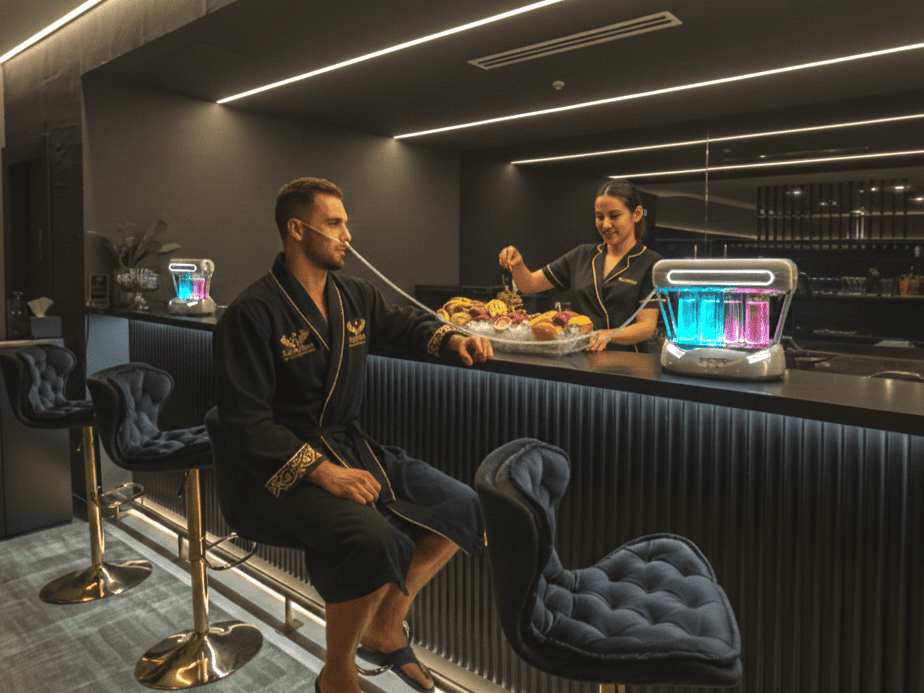
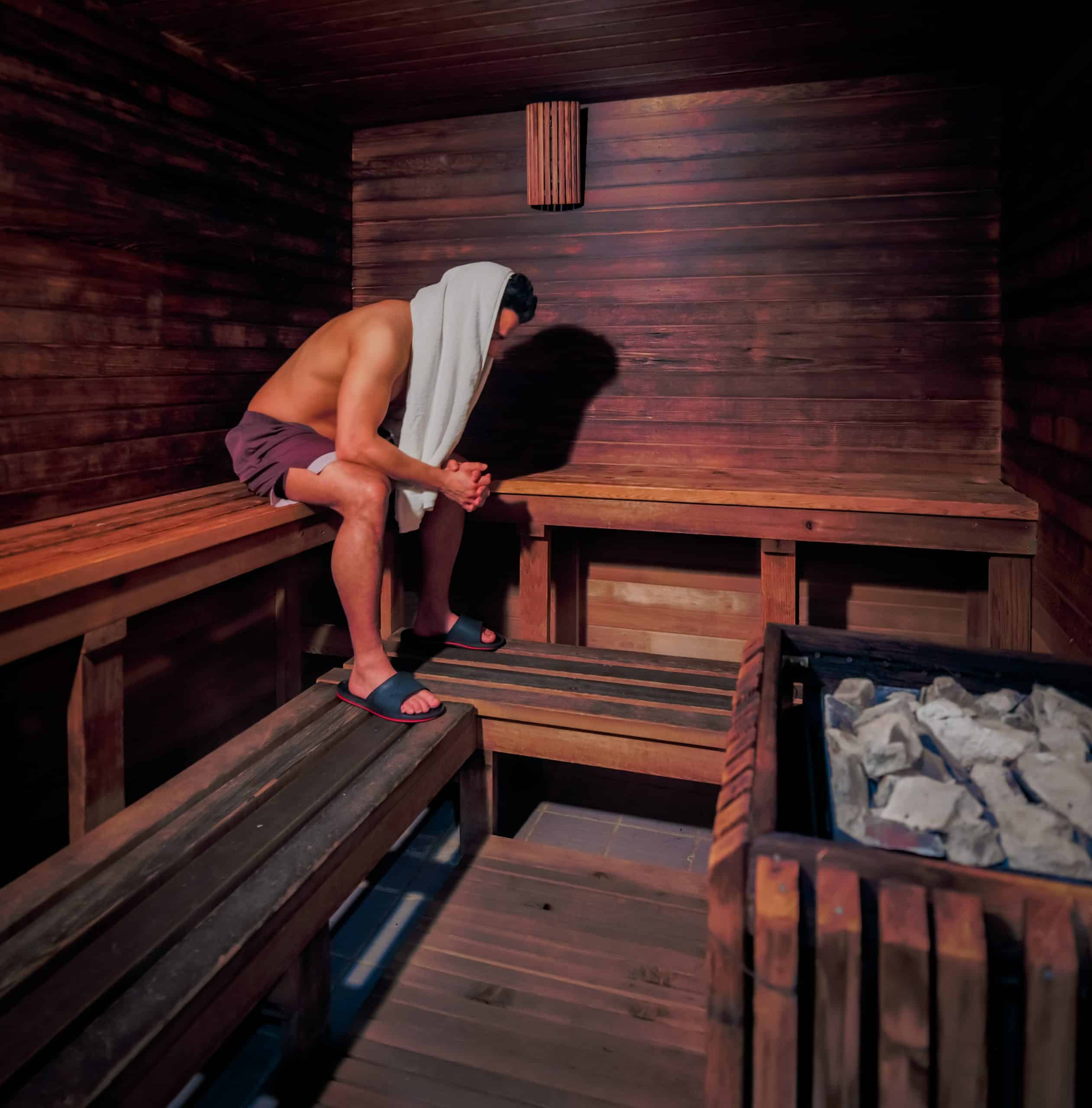
At Club Dynasty, the massage does not exist in isolation from the facility’s broader amenity circuit. The hot jacuzzi pool, the dry and steam saunas, the ice plunge pool, and the oxygen therapy bar are not peripheral features. They are the preparation that makes the massage most effective.
Heat — whether from the jacuzzi or the sauna — raises tissue temperature and increases blood flow to chronically contracted muscles, making them more receptive to the pressure work that follows. The increased pliability of warm tissue allows deeper work at lower force, which is both more comfortable and more effective than attempting the same depth of work on cold, resistant muscle. The ice plunge after heat produces the autonomic shift that begins the nervous system’s decompression process before the massage starts. By the time a guest moves into a private room for their session, the tissue is warm and responsive and the nervous system is already partway through the transition from sympathetic to parasympathetic dominance.
The result is a session that lands substantially differently than the same massage would deliver on a body arriving cold and braced from a workstation.
Finding the Pattern, Addressing the Pattern
The guests who get the most from a session at Club Dynasty — whether their first or their fiftieth — are the ones who arrive with some understanding of what they are actually carrying.
Not in clinical terms. Simply the recognition that the stiffness in the upper back is not random, that the jaw tension is connected to the headache, that the difficulty unwinding is not a character flaw but a physiological state with a physiological address. That recognition changes what they ask for, how they move through the facility, and how fully they allow the process to work.
The compare massages page at Club Dynasty is a useful starting point for guests trying to map their experience to the right session. For guests new to the facility, the first-timer’s guide covers the practical questions. For guests with a clear sense of what they need, the live schedule and the walk-in model mean the only remaining step is making the drive to Markham.
The body has been keeping score for a long time. The score can be reset. It just requires the right inputs, in the right sequence, delivered by people who understand what they are working with.